

 10 MOST POPULAR TOURS
 HISTORY & CULTURE
 FOOD AND BEV TRAILS
 CYCLE TRAILS
 ASK FOR AVAILABILITY
 Most Popular Tours
 Food & Bev Trails
 Spiritual Tours
 Spiritual
 Textile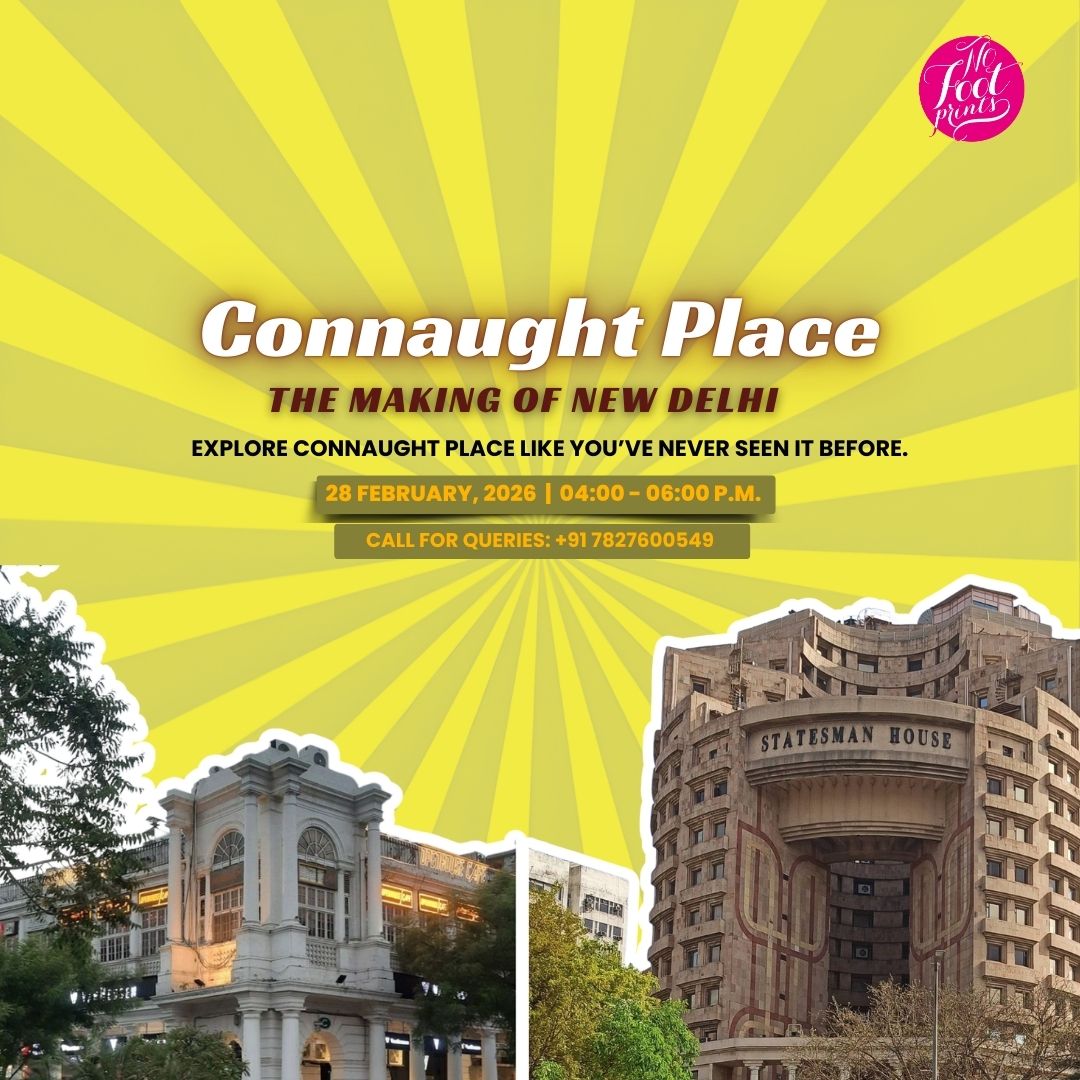
The Making of New Delhi: Connaught Place Tour
CP has been a circle of glamour, dissent, and memory. We’ll dive into its architecture, anecdotes, and iconic eats. Join us as we uncover how this district became India’s commercial and symbolic Centre.
Categories: Cultural Tours, Delhi, Event and Experiences, History Tours
Connaught Place was designed in the 1930s as the commercial heart of the new imperial capital. Built as part of the larger plan for New Delhi after 1911, its colonnades and radial roads expressed order and authority. But cities do not stay fixed in the meaning they were given.By the 1970s, CP had become something far more layered. Cinema halls like Odeon and Regal shaped popular imagination. The Indian Coffee House hosted journalists, students, and political debate. The Statesman building stood as a reminder of how the press negotiated power, especially during the Emergency. Jan Natya Manch performed street theatre in public corners, turning everyday space into political conversation.At the same time, families shopped at Snowhite, bought toys at Ram Chander & Sons, sipped milkshakes at Keventers (now Shake Square), and met friends under the arches. Palika Bazaar brought underground modernity. Mohan Singh Place carried middle-class aspiration. CP has since held glamour, dissent, consumption, and memory within the same circle.
This walk moves between architecture and anecdote, politics and pastry counters. We look at how a colonial shopping district became the commercial and symbolic centre of independent India- and how it has reflected the tensions of a young republic negotiating authority, culture, and identity.
Along the way, we pause to eat at iconic stops.
What to Expect?
- A history of how New Delhi and Connaught Place were planned and built
- Stories about cinema, cafes, street theatre, and the Emergency
- Stops at Shake Square, Wenger’s, and other long-standing establishments
- Conversations on public space, media, and middle-class culture
- Tastings, memory, and open discussion
Date: 28th February, 2026
Day: Saturday
Location: Connaught Place, New Delhi
Time: 4pm onwards
Price: INR 999